

Mold Removal in Charlottesville, VA
Charlottesville's year-round humidity and clay-rich soil create persistent moisture conditions that favor mold development, particularly in older homes with crawl spaces where water intrusion is common. Bauer Mold Remediation connects property owners across Charlottesville—including neighborhoods like Belmont, Fry's Spring, and Woolen Mills—with local mold removal providers who assess the scope of contamination and execute safe, thorough remediation. Addressing mold growth promptly protects your home's structural integrity and helps preserve indoor air quality for your household.
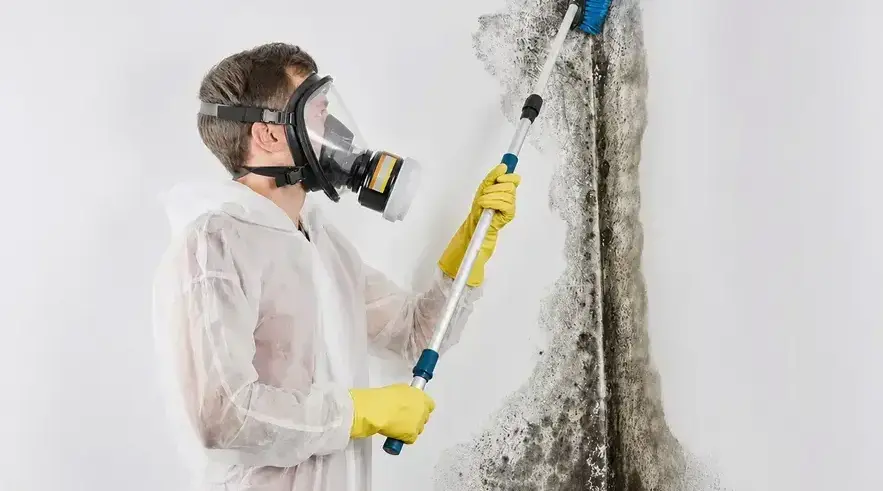
What gets cleaned in a home, and what comes out
The honest answer to “does this come out, or can it be cleaned?” turns on two things — what the material is, and how many square feet are affected. Those are the two axes of the EPA’s own remediation table, reproduced below for the materials usually found in a home.
| Material | Under 10 sq ftabout a cabinet door, or one ceiling tile | 10 to 100 sq ftroughly one wall, or a small bathroom | Over 100 sq ftmore than one room's worth of surface |
|---|---|---|---|
| Wallboarddrywall and plasterboardEPA, Table 2 | HEPA vacuum | HEPA vacuumRemove and discard | HEPA vacuumRemove and discard |
| Wood surfacesframing, subfloor and trimEPA, Table 2 | Wet vacuumDamp wipeHEPA vacuum | Wet vacuumDamp wipeHEPA vacuum | Wet vacuumDamp wipeHEPA vacuumRemove and discard |
| Non-porous, hard surfacestile, glass, metal and sealed hard surfacesEPA, Table 2 | Wet vacuumDamp wipeHEPA vacuum | Wet vacuumDamp wipeHEPA vacuum | Wet vacuumDamp wipeHEPA vacuum |
| Carpet and backingcarpet, backing and padEPA, Table 2 | Wet vacuumHEPA vacuum | Wet vacuumHEPA vacuumRemove and discard | Wet vacuumHEPA vacuumRemove and discard |
| Concrete or cinder blockslabs, foundation walls and blockEPA, Table 2 | Wet vacuumHEPA vacuum | Wet vacuumHEPA vacuum | Wet vacuumHEPA vacuum |
What those methods mean, in EPA's words
- Wet vacuum
Wet vacuums are vacuum cleaners designed to collect water. They can be used to remove water from floors, carpets and hard surfaces where water has accumulated.
EPA, cleanup methods- Damp wipe
Mold can generally be removed from nonporous (hard) surfaces by wiping or scrubbing with water, or water and detergent.
EPA, cleanup methods- HEPA vacuum
HEPA (High-Efficiency Particulate Air) vacuums are recommended for final cleanup of remediation areas after materials have been thoroughly dried and contaminated materials removed.
EPA, cleanup methods- Remove and discard
Building materials and furnishings that are contaminated with mold growth and are not salvageable should be double-bagged using 6-mil polyethylene sheeting.
EPA, cleanup methods
Removed and replaced, whatever the area
- Fiberglass or other insulation — batt or blown insulation.
Fiber glass, or any other insulation material that is wet or visibly moldy (or if an unacceptable odor is present) should be removed and replaced by a qualified heating and cooling system contractor.
EPA, air duct cleaningEPA states this in its heating-and-cooling guidance and it is quoted here as written. Its water-damage table reaches the same conclusion for both fiberglass and cellulose insulation.
These guidelines are for damage caused by clean water. If you know or suspect that the water source is contaminated with sewage, or chemical or biological pollutants, then Personal Protective Equipment and containment are required by OSHA.
EPA, Table 1Porous materials that are wet and have mold growing on them may have to be discarded.
EPA, cleanup methodsMold can grow on wood, drywall, carpet and furniture if they remain wet for more than 24 hours.
EPA, flood cleanup
What gets saved depends less on how the mold looks than on what the material is and how long it stayed wet — which is why two rooms with identical staining can need very different work. EPA's own framing is two-dimensional: the material on one axis, the size of the affected area on the other. Nothing in it turns on color or species.
Charlottesville sees measurable rain on about 77.5 days a year, most often in May, against roughly 47.1 inches in total.Source: NOAA 1991-2020 Climate Normals, MONTICELLO, VA US station (1.9 mi from Charlottesville)
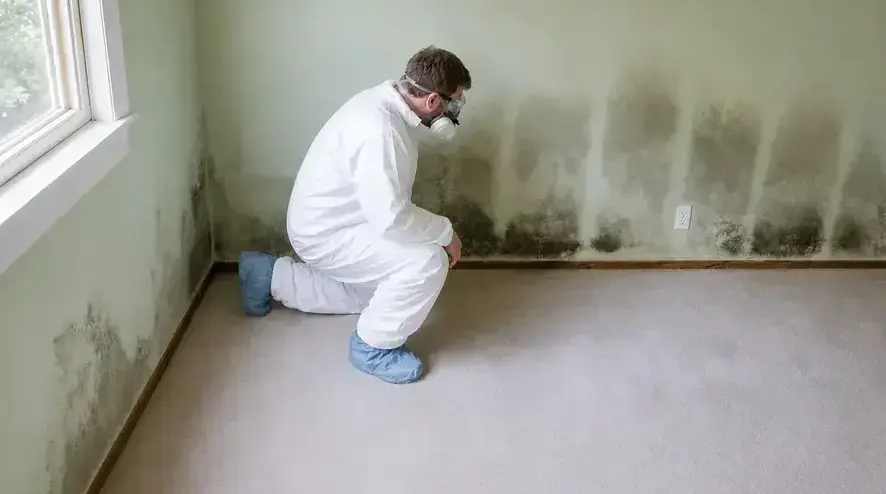
Mold Removal in Charlottesville: Year-Round Protection
Charlottesville's humid subtropical climate creates persistent moisture conditions that extend well beyond seasonal rainfall, making mold removal an ongoing concern for property owners throughout the year. The region's consistently high humidity levels, combined with the prevalence of crawl spaces in many older homes—a consequence of the area's clay-heavy soil and challenging topography—means moisture intrusion is a frequent entry point for mold growth. These below-grade spaces are particularly vulnerable to dampness and require vigilant attention to prevent the conditions that allow mold to establish and spread, threatening both the structural integrity of a home and the indoor air quality of its occupants.
Bauer Mold Remediation connects Charlottesville property owners with independent local mold removal providers who focus on thorough assessment, safe containment, and complete removal tailored to each property's specific situation. The process begins with a detailed inspection to identify the extent of mold presence and the moisture sources driving it, followed by targeted removal that addresses both the visible growth and the conditions that enable it to return. By partnering with responsive local professionals, property owners gain access to follow-up support and guidance on moisture management, helping ensure that mold removal translates into lasting protection for homes and businesses across Charlottesville.
Why Charlottesville Property Owners Choose Bauer for Mold Removal
Fast Local Mold Removal Response
Bauer connects you with independent mold removal providers in Charlottesville who understand local moisture challenges. Quick response times mean assessment and treatment planning begin promptly, limiting mold spread.
Thorough Mold Removal Process
The independent providers Bauer connects you to perform detailed mold removal with proper containment and safe removal techniques. Clear communication throughout treatment keeps you informed of findings and next steps.
Experienced Mold Removal Specialists
Bauer's network includes local mold removal providers with hands-on experience addressing moisture intrusion and fungal growth. Their knowledge of common problem areas helps ensure complete and effective remediation.
Crawl Space Mold Solutions
Charlottesville-area homes, particularly older properties in neighborhoods like Fry's Spring and Woolen Mills, frequently experience mold in crawl spaces due to persistent moisture. Bauer connects you with providers skilled in accessing and properly removing mold from these vulnerable areas.
How Our Mold Removal Process Works
Schedule Your Mold Removal Assessment
Contact Bauer Mold Remediation to connect with a local mold removal provider in Charlottesville who will arrange an inspection of your property. The provider will identify mold growth, moisture sources, and affected areas to create a removal plan tailored to your home or business.
Inspect & Diagnose Mold Growth
Your Charlottesville mold removal provider conducts a thorough inspection to locate visible and hidden mold, often focusing on moisture-prone areas common in the region's humid climate—including crawl spaces where moisture intrusion frequently occurs. Testing and documentation help determine the scope and strategy for safe mold removal.
Remove Mold & Restore Air Quality
The independent provider performs targeted mold removal using containment and remediation techniques to eliminate affected materials and restore indoor air quality. Follow-up monitoring and moisture-control recommendations help protect your property from future mold growth.
Dealing with Mold Removal in Charlottesville? Get fast, professional help.
Call Now — (434) 433-8821Mold Removal Serving Charlottesville and Surrounding Areas
Charlottesville's humid subtropical climate creates persistent moisture conditions year-round that go well beyond seasonal rainfall patterns. High humidity levels throughout the year establish an environment where mold can develop and spread inside homes and buildings, making mold removal a regular concern for many property owners across the region. This ongoing moisture load means that addressing mold growth promptly—rather than waiting for visible damage to worsen—helps protect indoor air quality and structural integrity.
Many older homes in and around Charlottesville feature crawl spaces, which are especially vulnerable to moisture intrusion due to the area's clay-heavy soil and terrain. Crawl spaces in particular tend to trap groundwater and condensation, creating ideal conditions for mold colonization. When you connect with an independent local mold removal provider through Bauer, they can assess whether moisture is entering from the soil, foundation, or ventilation, and recommend targeted removal and moisture-control strategies tailored to your property's specific construction and location—whether in established neighborhoods like Fry's Spring or Woolen Mills, or elsewhere throughout the Charlottesville area.
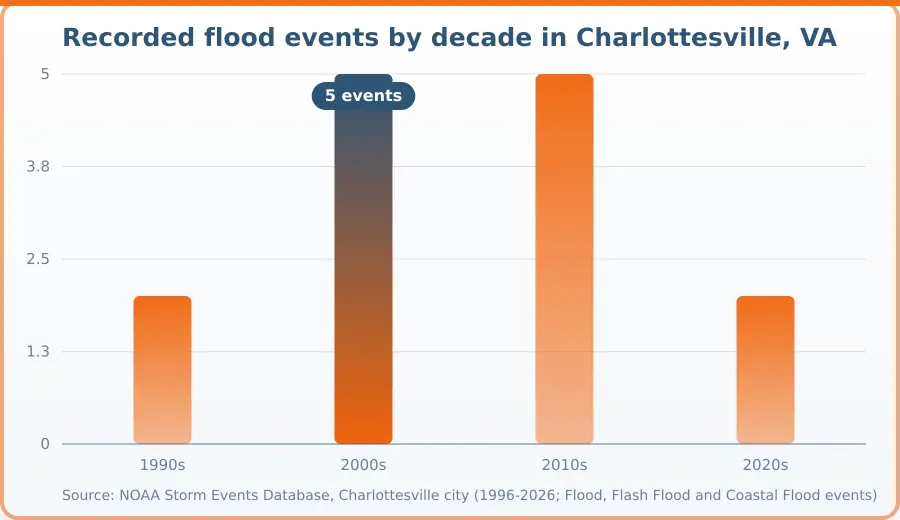
| Period | Recorded flood events by decade (events) |
|---|---|
| 1990s | 2 |
| 2000s | 5 |
| 2010s | 5 |
| 2020s | 2 |
Source: NOAA Storm Events Database, Charlottesville city (1996-2026; Flood, Flash Flood and Coastal Flood events). Retrieved October 5, 2026.
Seasonal Mold Removal Challenges in Charlottesville
Spring: Active Growth
Spring warming and increased rainfall create ideal conditions for mold colonies to expand rapidly indoors. Bauer Mold Remediation connects Charlottesville property owners with local providers who perform thorough inspections and targeted removal before mold spreads through walls and ductwork.
Summer: Humidity Peak
Summer heat and persistent humidity levels characteristic of the region drive moisture deep into building materials and crawl spaces—common problem areas in older Charlottesville homes. Local remediation providers in our network address these moisture-laden environments with containment and removal strategies tailored to humid-climate structures.
Fall: Moisture Trapping
As temperatures drop and homes are sealed against cooling weather, indoor moisture becomes trapped, creating stagnant conditions where mold thrives on walls, attics, and foundations. Bauer connects you with providers who identify and remove active growth while addressing airflow and drainage problems.
Winter: Hidden Spread
Cold months and temperature fluctuations cause condensation to accumulate in poorly ventilated spaces, allowing mold to colonize silently behind walls and insulation. Local mold removal specialists accessible through Bauer use moisture mapping and visual inspection to uncover winter-dormant growth before spring activation.
Mold Removal FAQs — Charlottesville, VA
Mold Removal typically begins with inspection to identify affected areas, followed by containment to prevent spore spread, removal of contaminated materials, and thorough cleaning and treatment of surfaces. The local providers Bauer connects you to will assess moisture sources, use appropriate safety measures, and restore affected spaces to safe conditions. Scope depends on the extent and location of the mold.
Bauer Mold Remediation connects Charlottesville property owners directly with independent local removal providers in the area, enabling fast response to your mold concern. Availability varies by provider and current workload, but working with a local company typically means quicker scheduling than waiting for distant contractors to reach the area.
Mold Removal pricing depends on the size of the affected area, depth of contamination, materials involved, underlying moisture source, and accessibility of the mold. Whether mold is in a crawl space, attic, wall cavity, or visible surface area also impacts scope and effort. Local providers will assess your specific situation to discuss cost factors.
Before Mold Removal begins, clear access to affected areas when possible and plan for temporary HVAC adjustments during containment. The removal provider will give specific instructions based on your situation—such as vacating rooms, protecting belongings, or securing pets. Preparation steps minimize disruption and help the removal process proceed safely and efficiently.
After Mold Removal, maintaining low indoor humidity, ensuring proper ventilation, fixing leaks promptly, and keeping gutters clear are key. The removal provider may recommend moisture control upgrades or identify ongoing moisture sources that need attention. Regular monitoring and addressing wet or damp conditions early help prevent mold from returning.
Charlottesville's consistently high humidity levels throughout the year create persistent conditions that favor mold growth indoors, particularly in spaces like crawl spaces where moisture intrusion is common in older homes. This means mold removal is not seasonal here—vigilance and timely action are needed across all months. Local providers understand these year-round moisture challenges.
Related Services
Homeowner Safety Toolkit
Verify Your Charlottesville, VA Mold Remediation Company
Before you hire anyone, use these independent national resources to confirm credentials, standards, and track record.
EPA
The federal government's own guidance on identifying, cleaning up, and preventing mold growth in a home.
Mold Prevention GuideIICRC
Publishes the S520 standard for professional mold remediation. Confirm a company's technicians hold real, current IICRC certification before you hire them.
Verify CertificationACAC
An independently accredited certifying body for mold inspectors and consultants — one of the few in this field whose standards are verified by an outside accreditation board, not just self-declared.
Find a Certified InspectorDealing with Mold Removal in Charlottesville, VA? Call (434) 433-8821 for 24/7 help.
Call Now — (434) 433-8821Areas We Serve in Charlottesville, Virginia
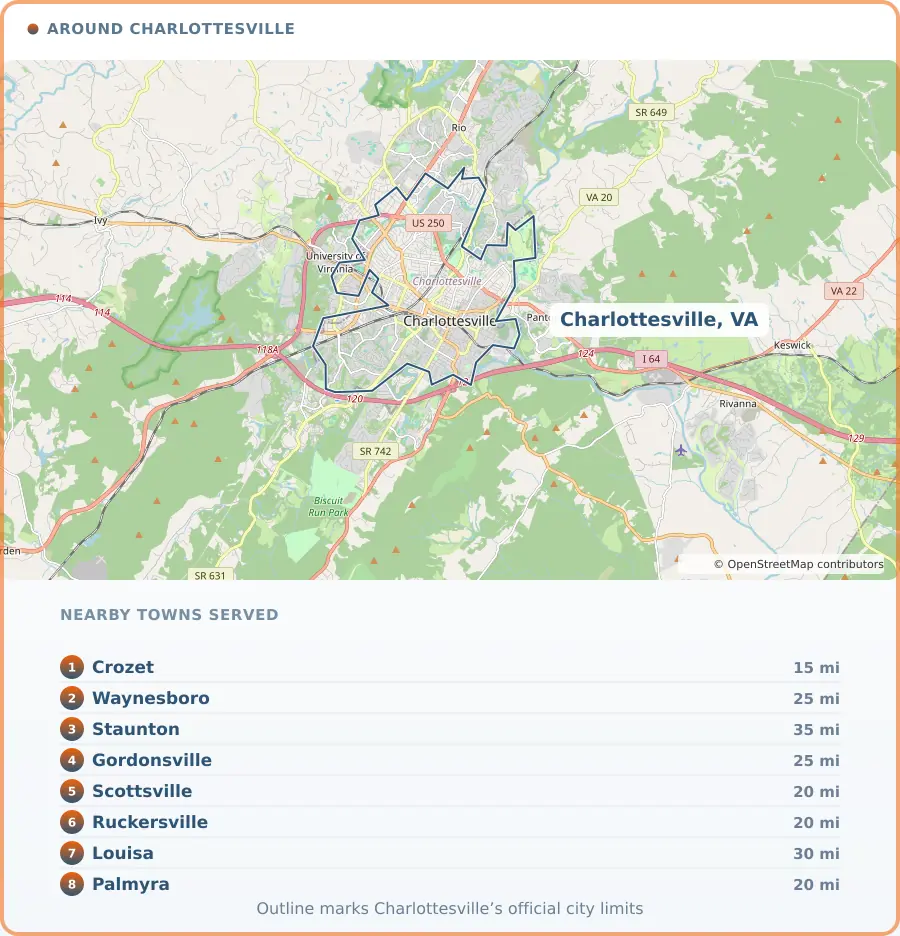
Serving Charlottesville, VA and 8 communities around it. Local knowledge of how each area is built shapes how the work is handled there.
Charlottesville, VA Information
Tucked into the rolling foothills of central Virginia, Charlottesville carries an energy that's equal parts academic and agricultural. The University of Virginia sits at the heart of the local economy, fueling healthcare, research, and professional services alongside major employers like UVA Health System, Sentara Martha Jefferson Hospital, and State Farm. Add in steady tourism from the area's historic sites and surrounding wineries, plus a growing technology and government presence, and you get a city with a notably stable, education-driven economic base.
Home to roughly 46,000 residents, Charlottesville, VA still feels like a collection of distinct neighborhoods rather than one sprawling grid — wander from the shaded porches of Belmont to the quiet streets of Fry's Spring and you'll sense how much local identity matters here, even as the city keeps growing.
Photo: Billy Hathorn, CC BY-SA 3.0