

Mold Inspection in Charlottesville, VA
Charlottesville's humid subtropical climate and year-round moisture levels create persistent conditions where mold can develop inside homes, particularly in older properties with crawl spaces that are prone to moisture accumulation. Professional mold inspection identifies growth early—before it spreads to other areas or affects indoor air quality—and helps property owners in neighborhoods like Belmont, Fry's Spring, and Woolen Mills understand the full scope of what needs remediation. Bauer Mold Remediation connects you with local independent providers who can perform a thorough inspection and recommend the right next steps for your home.
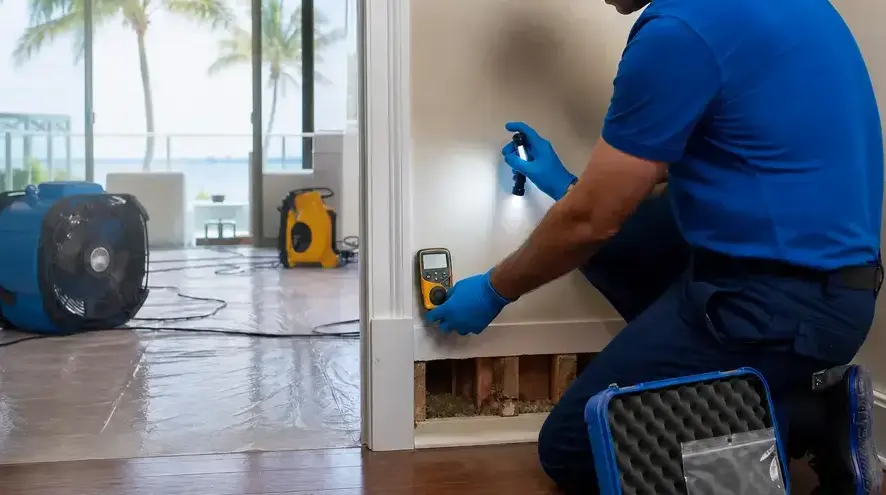
What does a mold inspection look for in Charlottesville, VA?
Testing is worth paying for when it answers a question looking cannot. Below is what EPA says sampling establishes, and what it does not.
Surface sampling may be useful to determine if an area has been adequately cleaned or remediated.EPA
Sampling for mold should be conducted by professionals who have specific experience in designing mold sampling protocols, sampling methods and interpreting results.EPA
So sampling earns its place at the two ends of a job — confirming what is there when it is hidden, and confirming it has gone once the work is done. EPA is equally clear that it is not always needed: in most cases, if visible mold growth is present, sampling is unnecessary, and there is no federal number a result can be measured against.
In most cases, if visible mold growth is present, sampling is unnecessary.EPA
Standards or Threshold Limit Values (TLVs) for airborne concentrations of mold, or mold spores, have not been set.EPA
Charlottesville city has recorded flood events in 10 separate years, most recently in 2025 — history worth knowing before deciding how far to look.Source: NOAA Storm Events Database, Charlottesville city (1996-2026; Flood, Flash Flood and Coastal Flood events)
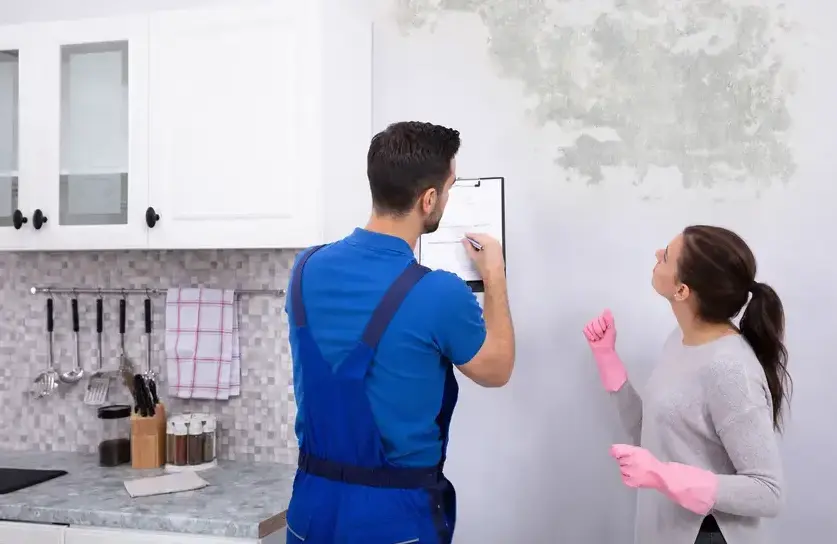
Professional Mold Inspection Services in Charlottesville
Charlottesville's humid subtropical climate creates persistent moisture conditions year-round that favor mold growth in homes and buildings. The region's clay-heavy soil and rolling topography mean that many properties, particularly older ones throughout neighborhoods like Belmont and Woolen Mills, feature crawl spaces—areas naturally prone to moisture intrusion and the mold colonization that follows. Property owners in Charlottesville benefit from early mold inspection to identify hidden growth before it spreads, compromises indoor air quality, or leads to costlier remediation down the road.
Bauer Mold Remediation connects Charlottesville property owners with independent local providers who conduct thorough mold inspections tailored to each home's construction and moisture history. These providers use systematic assessment techniques to locate visible mold, detect moisture sources, and evaluate conditions in spaces like crawl spaces where growth often begins unnoticed. A comprehensive inspection establishes a clear picture of what needs attention and informs any remediation steps that follow, giving you the information needed to protect your property and household.
Why Charlottesville Property Owners Trust Bauer for Mold Inspection
Fast, Local Mold Inspection
Bauer connects you with independent mold inspection providers in Charlottesville who understand your property's specific needs. Quick response times and local knowledge mean thorough assessment without unnecessary delays.
Clear Communication Throughout Inspection
Mold inspection findings need to be understood clearly. The providers Bauer connects you to explain results in plain language, address your concerns directly, and outline next steps so you can make informed decisions confidently.
Thorough Mold Inspection Process
Comprehensive mold inspection covers visible growth, moisture sources, and vulnerable areas you might miss. Detailed documentation and testing help identify the full scope of any problem so remediation can be planned properly.
Moisture Issues Common in Crawl Spaces
Older homes throughout Charlottesville frequently feature crawl spaces where moisture accumulation creates ideal conditions for mold growth. Mold inspection focused on these foundations catches problems early, protecting air quality and structural integrity before damage spreads.
How Our Mold Inspection Process Works
Schedule Your Mold Inspection Visit
Contact Bauer Mold Remediation to request a mold inspection in Charlottesville. We'll connect you with a local inspection provider who will arrange a convenient time to assess your property for mold growth, moisture sources, and indoor air quality concerns.
Receive Your Mold Inspection Assessment
A local mold inspector will examine your home or business, paying close attention to areas prone to moisture accumulation—including crawl spaces, which are common in older Charlottesville-area properties and frequently vulnerable to moisture intrusion. You'll receive findings and recommendations for any remediation needed.
Connect With Remediation & Follow-Up
If mold is found, Bauer Mold Remediation connects you with local remediation providers who can address the issue and help restore your indoor environment. Follow-up mold inspections ensure the remediation was thorough and your property remains protected.
Dealing with Mold Inspection in Charlottesville? Get fast, professional help.
Call Now — (434) 433-8821Mold Inspection Across Charlottesville and Surrounding Areas
Charlottesville's humid subtropical climate creates consistently elevated moisture levels throughout the year, a condition that extends well beyond seasonal rainfall and establishes an environment where mold can develop and persist indoors. Year-round humidity accelerates moisture accumulation in homes and buildings, making mold inspection particularly important for property owners seeking to understand their indoor air quality and protect occupant health. The combination of climate and regional geology—especially the clay-heavy soils common to the area—means that many older homes, particularly those in established neighborhoods like Fry's Spring and Belmont, feature crawl spaces where moisture intrusion and mold colonization are frequent concerns requiring professional assessment.
Crawl space moisture issues are a primary driver of mold inspection requests across Charlottesville and nearby communities. When ground moisture migrates into these below-grade areas, conditions quickly become favorable for mold growth, which can then affect indoor air quality and structural integrity throughout the home. An independent local mold inspection provider can identify moisture sources, assess mold presence, and recommend remediation strategies tailored to your property's construction and location. Bauer Mold Remediation connects you with local professionals who understand Charlottesville's specific moisture patterns and can perform thorough inspections to guide safe, effective next steps.
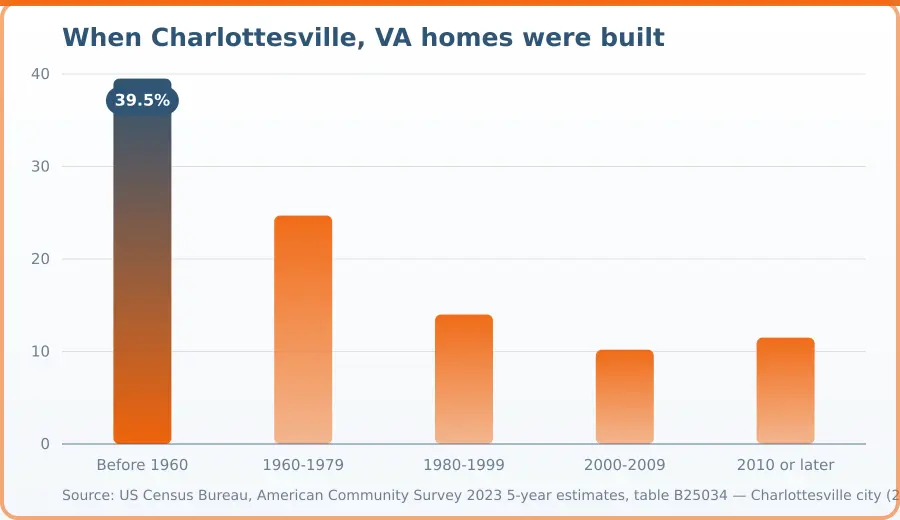
| Period | When homes were built (%) |
|---|---|
| Before 1960 | 39.5 |
| 1960-1979 | 24.7 |
| 1980-1999 | 14 |
| 2000-2009 | 10.2 |
| 2010 or later | 11.5 |
Source: US Census Bureau, American Community Survey 2023 5-year estimates, table B25034 — Charlottesville city (21,559 housing units). Retrieved October 5, 2026.
Seasonal Mold Inspection Needs in Charlottesville
Spring: Thawing and Moisture
As winter snow and ice melt, water infiltration into foundations and crawl spaces increases significantly. Spring mold inspections are essential to catch moisture-related growth before it spreads. Bauer Mold Remediation connects you with local inspectors who assess water damage and identify developing mold early in the season.
Summer: High Humidity Risk
Charlottesville's warm, humid summers create ideal conditions for mold expansion in enclosed spaces like crawl spaces beneath older homes. Moisture becomes trapped indoors, accelerating mold development. Professional mold inspectors from Bauer's network use moisture mapping and air sampling to detect growth that thrives in peak humidity months and recommend containment before remediation begins.
Fall: Transition and Condensation
Temperature fluctuations in fall cause condensation on cool surfaces, introducing moisture into attics, walls, and enclosed crawl spaces. Mold inspection during this season reveals whether summer humidity has left persistent growth or moisture patterns. Bauer connects property owners with inspectors experienced in identifying hidden mold before fall moisture becomes a winter problem.
Winter: Cold-Weather Containment
Winter dormancy doesn't stop mold; it persists indoors where heating creates dry air that can crack foundations, allowing spring water intrusion. Inspections during cold months help plan remediation without weather delays. Bauer's network of local providers schedules winter mold inspections to document existing growth and prepare comprehensive removal plans before warmer seasons accelerate activity.
Mold Inspection FAQs — Charlottesville, VA
A mold inspection examines your property for visible mold growth, water damage, and moisture conditions that support mold. The inspector checks common problem areas—crawl spaces, attics, bathrooms, basements, and around windows and pipes—and may use moisture meters or thermal imaging to detect hidden moisture. They document findings and typically provide a detailed report to guide next steps.
Bauer Mold Remediation connects you with independent local inspection providers in the Charlottesville area who typically respond quickly to requests. Availability depends on current demand, but many providers aim to schedule inspections within a few days. Contact us to discuss your timeline and find a provider who can accommodate your needs.
Inspection pricing depends on property size, accessibility of areas to inspect (especially crawl spaces), whether specialized equipment like moisture detection is needed, and the scope of the assessment. The independent providers we connect you with can provide estimates based on your specific property and concerns.
Clear access to areas the inspector needs to examine—crawl spaces, attics, basements, and under-sink areas. Make a list of visible moisture problems, past water damage, or areas where you've noticed musty odors. Let the inspector know about any health symptoms household members have experienced indoors, as this context helps them assess the urgency.
Manage indoor humidity by using exhaust fans in bathrooms and kitchens, and ensure proper drainage around your foundation. Fix leaks promptly and improve ventilation in enclosed spaces like crawl spaces. The independent provider you work with can offer specific recommendations based on what they find during inspection.
The Charlottesville region maintains high humidity levels throughout the year, creating persistent conditions that favor mold growth indoors. Moisture problems don't pause seasonally—they develop in crawl spaces, attics, and walls whenever humidity and water intrusion combine. Regular inspection helps catch problems early before they become extensive.
Related Services
Homeowner Safety Toolkit
Verify Your Charlottesville, VA Mold Remediation Company
Before you hire anyone, use these independent national resources to confirm credentials, standards, and track record.
EPA
The federal government's own guidance on identifying, cleaning up, and preventing mold growth in a home.
Mold Prevention GuideIICRC
Publishes the S520 standard for professional mold remediation. Confirm a company's technicians hold real, current IICRC certification before you hire them.
Verify CertificationACAC
An independently accredited certifying body for mold inspectors and consultants — one of the few in this field whose standards are verified by an outside accreditation board, not just self-declared.
Find a Certified InspectorDealing with Mold Inspection in Charlottesville, VA? Call (434) 433-8821 for 24/7 help.
Call Now — (434) 433-8821Areas We Serve in Charlottesville, Virginia
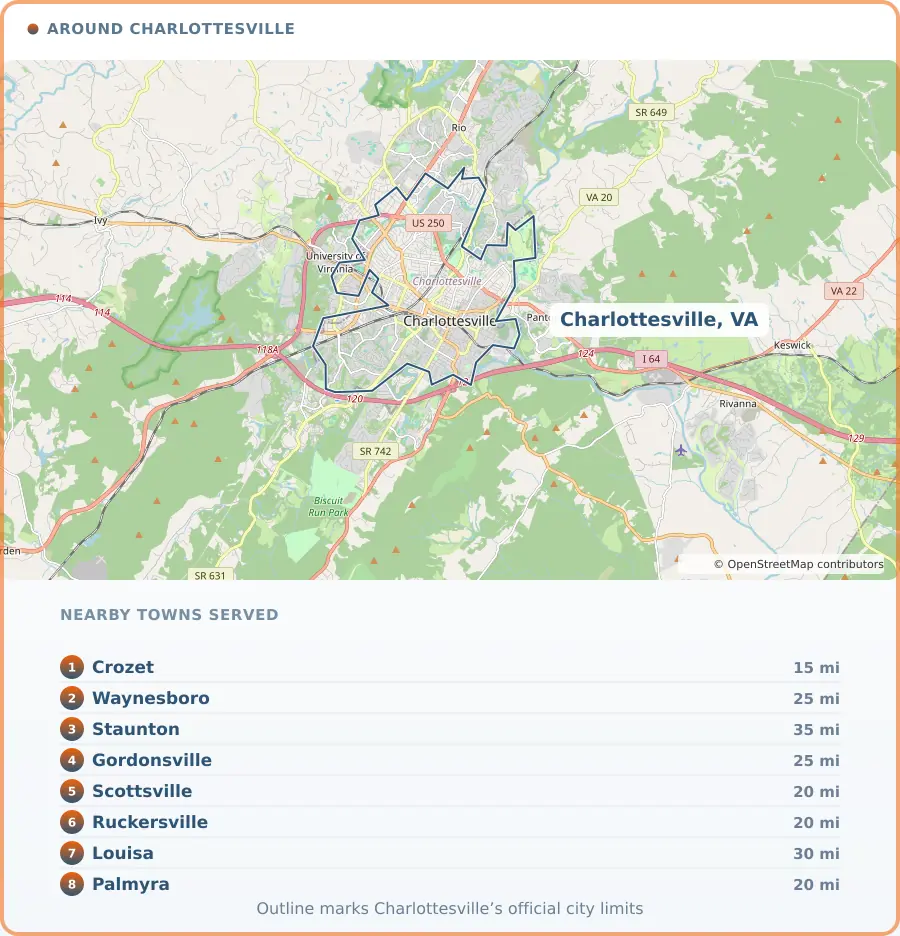
Serving Charlottesville, VA and 8 communities around it. Local knowledge of how each area is built shapes how the work is handled there.
Charlottesville, VA Information
Tucked into the rolling foothills of central Virginia, Charlottesville carries an energy that's equal parts academic and agricultural. The University of Virginia sits at the heart of the local economy, fueling healthcare, research, and professional services alongside major employers like UVA Health System, Sentara Martha Jefferson Hospital, and State Farm. Add in steady tourism from the area's historic sites and surrounding wineries, plus a growing technology and government presence, and you get a city with a notably stable, education-driven economic base.
Home to roughly 46,000 residents, Charlottesville, VA still feels like a collection of distinct neighborhoods rather than one sprawling grid — wander from the shaded porches of Belmont to the quiet streets of Fry's Spring and you'll sense how much local identity matters here, even as the city keeps growing.
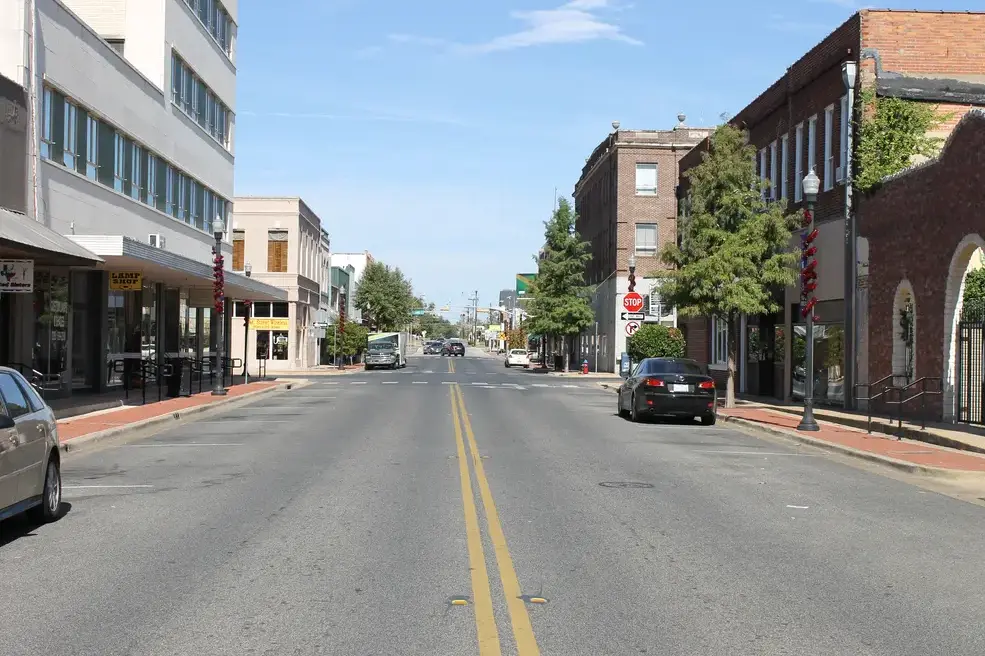
Photo: Billy Hathorn, CC BY-SA 3.0